Winter in the DMV is not just about cold—it is unpredictable. One hour you are freezing outdoors, the next you are overheated indoors. Most layers trap moisture, feel bulky, or irritate sensitive skin.
The real question is not “What is warmest?” but “What balances warmth, breathability, durability, and comfort?” That is where warm alpaca clothing enters the conversation.
Now let’s define who each option truly serves.
Who Should Choose What? A Smart Buyer’s Sorting Guide
When comparing fabrics, clarity matters. Instead of asking which material is “better,” let’s identify who each one works best for—especially if you are searching for an alpaca farm near Washington DC or an alpaca clothing boutique that offers long-term value.
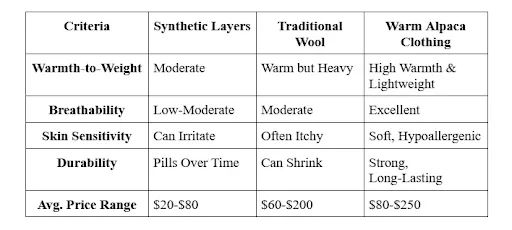
Quick Comparison Table
1. Synthetic Layers—Best For Budget & Short-Term Use
- It is ideal for occasional winter wear or travel layering.
- Affordable up front and easy to replace.
- Lightweight, but often traps moisture and odor.
- According to the Ellen MacArthur Foundation, “synthetic textiles contribute significantly to microplastic pollution.”
- Best for those prioritizing price over longevity.
2. Traditional Sheep Wool—Best For Classic Heavy Warmth
- Naturally insulating but often heavier on the body.
- Can cause itching due to lanolin content.
- Requires careful washing to avoid shrinkage.
- According to the Woolmark Company, “wool can absorb up to 35 percent of its weight in moisture before feeling wet.”
- Best for those comfortable with structural, classic winter layering.
3. Warm Alpaca Clothing—Best For Smart, Comfort-Driven Buyers
- Offers a superior warmth-to-weight ratio, meaning you stay warm without bulk.
- Naturally breathable, helping regulate temperature in fluctuating weather.
- Hypoallergenic since alpaca fiber contains no lanolin.
- Durable fibers resist pilling better than many traditional knits.
- Works beautifully for families exploring a family farm tour and outing in Maryland, professionals commuting daily, or gift buyers seeking something meaningful.
- Ideal if you value long-term cost per wear rather than replacing garments yearly.
- This is especially relevant for shoppers seeking an alpaca clothing boutique experience tied to quality and authenticity.
Alpaca clothing stands out for those who want warmth, softness, and longevity without compromising comfort.
If you are looking for apparel that transitions from outdoor strolls to indoor gatherings seamlessly, warm alpaca clothing becomes a practical and premium solution.
In short, warm alpaca clothing is not just about heat but about balanced performance.
Next, let’s explore how this comparison connects to real farm-to-closet experiences.
From Pasture to Performance: A Warmer Story, Woven With Purpose
1. It Starts at the Source—Not the Shelf
- At Alpaca Lane Criations, we do not just sell garments; we raise and care for the animals behind them.
- As an authentic alpaca farm near Washington, DC, our connection to the fiber is personal. That is why our warm alpaca clothing reflects real farm-to-closet integrity rather than mass-produced sourcing.
2. Warmth Without the Bulk, Backed By Fiber Science
- Alpaca fiber contains microscopic air pockets that enhance insulation while remaining lightweight.
- According to the Alpaca Owners Association, “alpaca fiber is warmer and lighter than sheep’s wool.”
- This natural structure allows our warm alpaca clothing to provide high warmth-to-weight performance, ideal for the fluctuating winters.
3. Hypoallergenic Comfort for Sensitive Skin
- Unlike traditional wool, alpaca fiber contains no lanolin, making it naturally hypoallergenic.
- ResearchGate notes that “natural fibers with lower allergenic properties are increasingly preferred by consumers seeking skin comfort.”
- That is why families visiting our alpaca petting zoo in Maryland often leave with warm alpaca clothing soft enough for everyday wear.
4. Designed for Real Life
- Whether you are commuting into DC, attending outdoor seasonal events, or enjoying family farm tours in MD, our warm alpaca clothing transitions seamlessly from crisp mornings to heated indoor spaces.
- It regulates temperature rather than trapping heat, helping you stay comfortable throughout the day.
5. Boutique Curation, Not Warehouse Inventory
- As an alpaca clothing boutique, we intentionally curate each sweater, scarf, and accessory.
- We prioritize durability, stitching quality, and timeless style over fast-fashion turnover. This ensures our warm alpaca clothing delivers long-term value instead of short-term wear.
6. An Experience Beyond the Purchase
- Visitors often discover us while searching for a unique event venue with animals or attending a farm tour.
- When you meet the alpacas, learn about fiber processing, and then feel the finished garment, the connection changes everything.
- Our warm alpaca clothing becomes more than a layer—it becomes part of the story you experienced.
7. Community-Centered & Experience-Driven
- As a family-owned agritourism destination in Upper Marlboro serving Maryland, Virginia, and DC, we blend retail with education.
- From guided tours to seasonal events, our boutique supports a full-circle experience. That is why choosing warm alpaca clothing here feels intentional—not transactional.
Naturally Curious? Let’s Answer What You Are Wondering
FAQ 1. Is Warm Alpaca Clothing Really Warmer Than Synthetic Layers?
Answer: Yes. Alpaca fiber’s hollow structure improves insulation without heaviness, making warm alpaca clothing warmer per ounce than many synthetics.
FAQ 2. Will It Feel Itchy Like Traditional Wool?
Answer: No. Because alpaca fiber contains no lanolin, it is naturally hypoallergenic and softer on sensitive skin.
FAQ 3. How Do I Care for Warm Alpaca Clothing?
Answer: Most pieces require gentle hand washing or delicate cycles with cold water, then air drying to preserve shape and longevity.
FAQ 4. Is It Worth the Higher Price Point?
Answer: When you consider durability, comfort, and cost-per-wear, warm alpaca clothing often outlasts cheaper alternatives that pill or lose shape quickly.
FAQ 5. Can I Shop and Experience the Farm in One Visit?
Answer: Absolutely. Many guests combine boutique shopping with tours, seasonal events, or private gatherings—making it both a retail and leisure experience.
Next, let’s bring this comparison together and help you decide confidently.
From Quick Savings to Lasting Warmth: Choosing What Truly Serves You
At Alpaca Lane Criations, we believe the real comparison is not synthetic layers versus natural fiber—it is short-term savings versus long-term comfort.
Synthetic options may cost less upfront, but they often lose shape, pill quickly, and require frequent replacement.
When you invest in warm alpaca clothing, you are choosing durability, temperature regulation, and hypoallergenic softness that performs season after season in the changing Maryland winters.
The cost per wear becomes lower over time, especially when one reliable layer replaces multiple bulky ones.
Beyond function, there is experience—visiting our alpaca farm near Washington, DC, exploring our alpaca clothing boutique, or pairing your purchase with family farm tours in MD.
Ready to experience the difference? Explore our warm alpaca clothing collection, book a visit, or contact us to learn more.
